In 2018 You Were Enough

Start Finish

Despite the varied opinions on the effectiveness of New Year’s resolutions, I must admit that I really enjoy them.  For years my husband and I have spent New Year’s Eve reflecting on the year that has passed and talking through our dreams for the one ahead.  We set goals, choose a “word of the year”, and do quizzes about our priorities.  We are  New Year’s geeks.

I also enjoy hearing about other people’s resolutions.  I think it is a neat “snapshot” way to hear about what someone prioritizes and get to know their heart a little bit better.  On an amusing note, I also tend to find myself giggling because most New Year’s goals seem to come out sounding like some version of the Seven Dwarfs.  “In 2019 I am going to be Happy and get more Sleepy and become less Grumpy, less Dopey, less Bashful and less Sneezy because I am going to the Doc!”  My particular dwarf for 2019 is Breezy.  She plans to ride the wind wherever God may take her.  I’ll be very curious to see where she lands.

For many, New Year’s resolutions are made in this type of lighthearted and good-natured way.  However, for others, reflection over the previous year and setting goals for the one ahead can quickly become a subtle exercise in criticizing how we weren’t “enough.”  You will recognize the “not enough” voice if you hear it on New Years because you probably hear it on plenty of other days throughout the year.  It’s the voice that shows up on Sunday nights and Monday mornings creating panic for the week ahead and the one that reappears at the end of the week to remind you what you didn’t accomplish.  It’s the voice that minimizes progress and amplifies setbacks.  It’s the voice that drives insecurity and self-doubt and tells you again and again that you weren’t a good enough parent, spouse, friend, co-worker, or lover of Jesus.  It’s the voice of shame and if it’s extra loud here at the end of the year we would all do well to take this opportunity to say, “Zip it!”

The reality is that most people do the best they can with what they have.  We want to do well and on many days we are probably doing better than we are willing to admit.  When our New Year’s reflections become laser-focused on what we didn’t do “right” we forget to recognize what we overcame, the stressors we faced and the surviving that we did.  The day-in-day-out grind of life creates many challenges that sometimes fade when we are looking at the entire picture.  Life is hard folks.  And for some, 2018 was very, very hard…and you made it.

And so, as you head into your time of reflection this year please remember to be kind to yourself.  Acknowledge all of your incredible accomplishments.  Celebrate the days that you conquered the world and the days you just made it out of bed.  Find value in the big steps and the baby steps and know that each one is part of a great big journey to become who God designed you to be.  You were enough this year.

A Christmas Music Devotional

Music Faded

I love Christmas. The lights, the merriment, the events, the sparkles. I love every bit of it. Oh, but the music. The music is what always sets Christmas in a separate realm because, some of the most incredible worship music ever penned gets relegated to this one month of the year and I try to absorb every second of it I can. I wanted to provide an opportunity for a unique Christmas devotional here for you today. I am going to take a moment to lay out portions of the lyrics to some of our most beloved Christmas songs for you to meditate on as well as provide one video at the end of my favorite modern Christmas worship adaptations. Some words will be familiar and some are from stanzas of the songs we rarely hear. Sometimes when we separate the words from the music God can speak His message afresh in our hearts. I hope these words are a blessing as we move only days away from our celebration of the coming of the Savior of the world.

Silent Night

Silent night, holy night!
Shepherds quake at the sight
Glories stream from heaven afar
Heavenly hosts sing Alleluia!
Christ the Savior is born

O Come O Come Emmanuel

O come, O come, Emmanuel
And ransom captive Israel
That mourns in lonely exile here
Until the Son of God appear
Rejoice, rejoice, Emmanuel
Shall come to thee, O Israel

O Holy Night

O holy night!  The stars are brightly shining,
It is the night of our dear Savior’s birth.
Long lay the world, in sin and error pining.
‘Til He appeared and the soul felt its worth.
A thrill of hope the weary world rejoices
For yonder breaks a new and glorious morn.
Fall on your knees!  Oh, hear the angel voices!
Oh night divine, the night when Christ was born.

Joy to the World

Joy to the world, the Lord is come
Let earth receive her King
Let every heart prepare Him room
And Heaven and nature sing
And Heaven, and Heaven, and nature sing

Hark the Herald Angels Sing

Hark! the herald angels sing:
“Glory to the newborn King!
Peace on earth and mercy mild
God and sinners reconciled”
Joyful, all ye nations rise
Join the triumph of the skies
With angelic hosts proclaim:
“Christ is born in Bethlehem”
Hark! the herald angels sing:
“Glory to the newborn King!”

Christ by highest Heav’n adored
Christ the everlasting Lord!
Late in time behold Him come
Offspring of a Virgin’s womb
Veiled in flesh the Godhead see;
Hail the incarnate Deity
Pleased as man with man to dwell
Jesus, our Emmanuel
Hark! the herald angels sing:
“Glory to the newborn King!”

Hail the Heav’n-born Prince of Peace!
Hail the Son of Righteousness!
Light and life to all He brings
Ris’n with healing in His wings
Mild He lays His glory by
Born that man no more may die
Born to raise the sons of earth
Born to give them second birth
Hark! the herald angels sing:
“Glory to the newborn King!”

My goodness but these saints knew how to write a song! When I read these words in worship, separate from the tunes that have become so familiar it is such a different experience. And, now for the reverse. Leonard Cohen’s Hallelujah is an incredible song I have loved for years. Cloverton adapted it to share the Gospel. It is beautiful and I hope it blesses you today. Merry Christmas my friends.

Here’s Your Permission to Be Bummed Out This Christmas

Sad Christmas Lady

I remember a few years ago when I heard the term, “Blue Christmas” for the first time.  Blue Christmas services are held by churches in many communities to support those who are grieving during the holidays.  Losing a loved one, losing a job, uncertainty about the coming year, coping with illness, financial or mental health challenges, difficult memories of childhood, or simply just not being as into the festivities are all very valid, and very common reasons people sometimes struggle with sadness during the holidays.  The experience of feeling separate or different from the twinkling lights and merry music often make people feel even more alone than usual.

When I was 16 years old my Father was diagnosed with cancer and died within a few months.  It was a swift and life-altering experience for our family.  He died on July 3rd, however, the service and burial were not until July 6th.  The day after he passed we attended a 4th of July celebration.  There were happy people everywhere.  Lots of music, hope, and pretty lights filled the sky.  It was the most bizarre feeling to have such deep grief inside while the bustling activity went on all around us.  It felt a little bit like watching a play that I couldn’t leave…everyone around me was playing their parts but I could only watch.  Christmas can be a similar feeling but even more intense as the celebration is everywhere you go for weeks on end.

I share this because I know there are some of you who this Christmas, or maybe most Christmases, may feel like this.  You may find yourself able to join in with family and friends on occasion or you may literally be struggling day-to-day just to get on the other side of January 1st.  Whether your life is full of activities and people or you are feeling deeply alone, the pressure to “enjoy yourself” can be suffocating.  Even for people who have no discernable reason to feel sad during the holidays it is common to have a blue day here or there simply because we are human.  The expectation of the holidays paired with the memories of the past can create a tension that is deeply painful.

So, if you are bummed out this holiday season, that’s okay.  If you spend the whole season bummed out, that’s okay.  If it’s just a day here and there, that’s okay too.  If it’s actually on Christmas Day and your child steps on an ornament and you end up in the ER, or your adult child can’t make it in because of poor weather or family circumstances, or the pie burns or the new gift gets broken or…whatever.  It is more than okay that not every day is filled with the merriment of the season.

Sadness is an emotion that is allowed during Christmas.

Here are some survival tips if you or someone you know struggles with sadness during the holidays:

  • Try not to judge your emotions.  Feeling sadness when encountering loss or disappointment is normal.  Shaming yourself for being normal usually only serves to make you feel worse.
  • Opt out of events and reach out to others as needed.  You may find that more people than you think will “get it.”
  • Your present to yourself is self-care.  Remember to sleep, exercise, eat well and do those little things that feel good…long shower, good book, whatever works for you.
  • Go outside.  Even if you have to bundle up.  Seasonal affective disorder is a very real thing and we need daylight.
  • Allow for some “gray space” in your holiday.  Just because one day, one gathering, or one of the many trips to the store was difficult doesn’t have to cast a shadow over the entire experience.  Leave room for God to redeem moments as they come.
  • Reach out to people who you know may be struggling with sadness this season.  People who are grieving during Christmas sometimes feel pressure to “put on a face” so as not to bring down everyone’s merriment.  The best present you may be able to give someone is the permission to cry on your shoulder.
  • Do what you need to in order to honor Christmas in a way that is meaningful for you.  Putting a present on a grave, spending time telling stories about the person you have lost, shedding a few tears on a “remembrance walk” are all ways to let your love and your grief share space.
  • See if you have a Blue Christmas or Longest Night service in your community.  They can be both powerful and beautiful.
  • In general, try to set aside any expectations that have little chance of being met.  A Christmas filled with an openness to whatever the days may bring has a much higher chance of being enjoyed.

Grace and blessings to you all.

It’s Coming. Preparing Your Heart for Christmas Toys.

Toys

I love Christmas.  I really love Christmas. However, there is one part of Christmas that brings me to almost clinical levels of panic every year. Christmas crap. I know, a professional shouldn’t really say “crap” in a blog post but that’s exactly how I feel about it so, authentic we shall be today. For those with gentler sensibilities feel free to call it “Christmas clutter”…it sounds nicer and more British.

Christmas crap is all the tangible stuff that comes with Christmas. It’s the tree that is beautiful but takes up extra space in the living room where I would normally be walking or sitting. It’s the wrapping paper that ends up everywhere and the tape stuck to the carpet. It’s the extra dishes that cover the counters and fill the refrigerator. And it’s the toys. The tiny pieces, battery needing, parent participation, square-foot covering, and all too quickly lost interest in, toys.

Now, before you go labeling me ungrateful, hear me clearly. I know I am speaking from a place of privilege. My kids have more than what they need and they are going to get more than what they need this Christmas because, well, it just is. They have a lot of people with a lot of privilege in their lives who give them stuff. I am equally grateful and aware of the need to try to educate them that not everyone has what they have. I am going to do my level best to limit what we give them, to educate them on needs vs. wants, to focus on JESUS but folks, this is Christmas in America for this middle-class woman and I know the crap is coming. I’ll keep working on the rest of it the other 360+ days of the year. The point today is making sure my heart is right regardless of the circumstances.

When the crap hits its zenith, usually sometime between the 24th and the 26th I usually find myself in one of two places. One, I am frantically searching my mind and my home for someway and somewhere to put everything away so that I feel better. Or two, I am attempting to find space in my mind and my language to teach my children exceptionally noble lessons about all that they have. Do you know what my children need at that exact moment? Neither of those things. They. Need. Me.

My children are going to remember if I had a wrapping paper war with them or if I am hollering at them because they are interfering with me cleaning up.

My children are going to remember if I put together a painstakingly specific Lego set rather than telling them we’ll do it later once everything settles down.

My children are going to remember if I play their new game with them, cut the 86 zip ties off their new toy, find the screwdriver to put in the battery, or actually participate in their excitement over the toy with the many…many…many tiny pieces because it meant I stopped to be with them, not their stuff.

All the privilege in the world may as well be wasted if we don’t pair it with love. I always tell my kids Christmas is not about receiving gifts. This year I hope I remember that Christmas is also not about my management of those gifts. You have 360+ other days in the year to attend to the rest of it. Be “present.”

When You Count Your Blessings This Thanksgiving, Count You.

adult-beautiful-face-774866.jpg

In just a few short days, many of us will take part in the Thanksgiving tradition of offering gratitude. We focus, rightly so, on all the many ways other things, and other people, add value to our lives. This year, I want you to add one more person to that list of blessings. You.

I know, I know, it’s super uncomfortable to think about ourselves in this way but it’s important. In fact, it’s really important. Sometimes we go so far in our efforts toward humility that we forget about God’s gifts in us, thus opening ourselves up to all sorts of insecurities. Jesus was humble but He also knew exactly who He was and what He had to offer. He “made himself nothing” (Phil. 2:7) but was also completely empowered. It is not arrogant to recognize how you have been uniquely designed. Frankly, you need to know what you do well and how you add value to the lives of others if you are going to live out God’s design in you!

And ladies, I am going to challenge you specifically. Women tend to downplay their worth and we suffer for it when it causes us to question our value or our abilities. More directly, Moms, we are way too hard on ourselves. You are a blessing to your children and I want you to identify specifically how you add value to their lives. We spend so much time thinking about what we didn’t do right, questioning if we are making the right decisions and how we can do things better that we have little time to notice what we are doing well. We shame ourselves and we compare ourselves, not only to others but to the vision of what we think we are supposed to be. We make ourselves less than we are, less than God created us to be.

And so, this Thanksgiving when you begin to count your blessings, remember to include yourself among them. You are a gift to others. Own it so you can live it. God has a lot of fun making an impact through you.

I am a blessing as a Mom because…

I am a blessing as a friend because…

I am a blessing as a spouse because…

I am a blessing as a teacher because…

I am a blessing as a coach because…

I am a blessing as a coworker because…

I am a blessing as a daughter because…

I am a blessing as a son because…

I am a blessing as a Dad because…

…I am a blessing as me because…

Please be grateful for God’s design in you this Thanksgiving and enjoy what a blessing you are to others.

The Suffering Thinker

“…being confident of this, that he who began a good work in you will carry it on to completion until the day of Christ Jesus.” Philippians 1:6

I recently watched a video by Dr. John Maxwell, leadership guru, talking about smart thinking vs. sustained thinking.  It wasn’t very long into his message before I audibly scoffed and said, “Humph, sustained thinking.  Come on John.  I have small children and a husband with an extremely busy schedule.  I don’t know the last time I had a sustained thought.”

As an illustration, I want to share what happened while I was working on this very post.  I had given myself one hour to work while my daughter took in a couple “Super Wings” episodes.  As anyone with some type of life/time constraints knows, when you get those precious moments you try to make the most of every single second.  Shortly after I started writing, the clock above our computer fell off the wall, hit the desk and shattered.  Tiny shards of glass covered the desk, keyboard, and the floor where my children play.  Then, when I moved the computer to clean up the mess, the power cord came out shutting down the work I had been doing.  Ugh, cue the frustration.  It didn’t matter if I was resolved to work on my calling.  Life got in the way as it so often does.  I smiled a little while later when it came into my head that the shattering clock was actually parabolic.  God does not see time or progress the same way we do and I would probably benefit from “throwing out” the way I think about how things get done.

It has taken me a full 15 years to produce any tangible evidence of the call I feel to write.  As years passed and I wasn’t a “writer” yet the shame and regret began to build because I felt like I wasn’t doing what I was being called to do, somehow being disobedient, missing out on an opportunity, etc.  Sadly, I eventually allowed my “sustained thinking” to become “suffering thinking.”  I spent years unnecessarily frustrated with myself and the creative process because I did not place enough value on the “how” rather than the “when.”  I was not remaining confident of God’s process in me and I was sabotaging any joy I might have had along the way.

Many of you have gifts and visions that God has cast into your life.  You spend time thinking about it when you can but there are a great many things that can, and do, get in the way of tangible progress at times.  My encouragement to you today is that when you do get a moment to think, realize that you are working.  Your 30-second thought here or scribbles on a notepad there are part of your sustained thinking process.  You are honoring God’s call in your life every time you add a moment to the string of moments that will eventually lead to your goal.  Relish in the confidence that every step brings because you know, “that He who began a good work in you will carry it on to completion.”  May I be the very first to congratulate you on reaching your goals, before they are even realized.

Video: http://www.johnmaxwellteam.com Minute with Maxwell Coaching

What Does It Feel Like to Change Our Thinking? A Lesson From Daniel Tiger

Last week we talked about learning how to quiet our minds or “be still” so we can hear God’s voice more clearly.  For any of you who have tried this since then, you have probably found that it can be really hard to change how you think!  When we try to change our thought patterns we often find our minds distracted by our doubts, our insecurities, or we simply start ticking through the to-do list for the day in an attempt to control our worry.  If this is you, take comfort!  There is hope for clearing out the noise.

First, one of the greatest achievements in brain science in the past fifty years has been in the area of neuroplasticity.  We used to believe that once we passed a certain age it was almost impossible for our brains to begin thinking a different way.  We have now learned that neuroplasticity is lifelong and that with enough repetition, our brains can literally form new pathways and new connections that allow us to think and behave in different ways.

Secondly, I would like to offer you a nostalgic example of what changing your thinking sounds like.  The clip below comes to you courtesy of the late, great Mr. Rogers.  In an episode on “Making Mistakes”, the recently released documentary on his life highlights a beautiful exchange between Daniel Tiger and Lady Aberlin.  In this conversation, Daniel shares some very difficult thoughts he has been having.  The way she listens to him is a masterclass in how to hear someone say hard things.  After Daniel shares his worries with her, Lady Aberlin kindly responds by offering information that she hopes will convince him that the things he believes about himself aren’t true.  Daniel listens politely, clearly understands the information, but is not convinced.

It is in this moment that the genius of Fred Rogers really kicks in.  As Lady Aberlin continues her attempts to share truth with Daniel, he begins to sing his doubts at the same time, creating a duet.  Their competing words are an incredible picture of what happens in our brains when we are trying to listen for truth but our old thought patterns keep playing at the same time.

This noisy combination of our old thoughts and our new thoughts is exactly what change feels like, especially at the beginning.  It can be uncomfortable to have those competing voices and it takes a while, sometimes a long while, to change.  However, with enough practice, and kindness to yourself as you go along, the voice of truth will eventually begin to sing louder than the other.  Remember, Jesus does not get tired of telling us the same things again and again, in fact, the Bible suggests that these kinds of repetition actually help keep us safe. (Philippians 3:1)

Duet away my friend, He loves singing with you…

Video – PBS Kids.


Increasing Our Tolerance for Stillness

Stillness

“Be still and know that I am God.” Psalm 46:10

One of my very favorite things about Scripture is when God packs a big punch into a tiny package.  Today we are looking at one of the Bible’s greatest hits, Psalm 46:10.

And so the verse begins…”Be still.”  Mercy what a challenge this is in our life!  While setting aside the to-do list and being physically still in our lives is one thing, it is the practice of being mentally still that can be particularly difficult.  Advances in technology have given us incredible gifts of knowledge and entertainment at our fingertips at any time.  However, if my children’s response to Halloween candy is any indication, we are not a people who tend do particularly well with unbridled, unboundaried access.  We live in a world where we can ingest constant stimulation if we choose to.  We can turn on our phones, our radios, our televisions, our computers, our tablets, even our lights any time we desire.  Now, before you think I am on some sort of anti-technology campaign, trust me, I am not giving up my electricity, Netflix or smartphone any time soon.  However, I am noticing that when I get a rare quiet moment in my life I usually find myself engaging with external input rather than internal reflection.  This can be both habitual and addictive and, when left unchecked, robs us of a critical element of our faith and the space to grow in the discovery of God’s design in us.

When we regularly choose external input we actually reduce our tolerance for stillness.  Additionally, depending on our beliefs about work and activity it is possible that we may have villainized stillness as laziness or boredom.  If we place stillness in these categories we can make it even more difficult due to an accompanying voice of accusation or a feeling of discomfort.  To be clear, laziness is an unwillingness to work for the benefit of yourself or others.  In contrast, stillness is intentionally setting aside your work to give your brain and body a chance to relax, creating the ability to work better in the future.  Boredom is also not stillness.  Rather, boredom is the experience of being discontent in the stillness because it doesn’t feel like “enough.”  In short, stillness grows us and restores us, laziness and boredom work against us.

The benefits of intentionally creating space and tolerance for stillness are numerous but I will highlight two here today.  The first is a physical benefit.  When we allow our brains the opportunity to slow down and be present we actually reduce our level of cortisol, the stress hormone.  Then, instead of running like a car that is revved up all the time, we “lower our idle” greatly benefitting both our literal hearts and our minds.  Secondly, and maybe most importantly, stillness allows us the necessary space we need to engage in personal development.  When we are only processing the products of other people’s creativity, we leave very little room for our own to develop.  There are no shortages of people or products who would like to create our identities for us, to tell who we are, who we should be or should not be.  When we cut off these voices every once in a while we grow our ability to discern God’s voice, and our own, from the rest of the noise.  One of the greatest tragedies I can think of is when someone doesn’t grow into who God designed her to be because she was busy shopping all of the other designs.

One of the greatest gifts we can give our children, and ourselves is an increased ability to flourish without external stimulation and increase our tolerance for internal reflection.  It is in the stillness where we stop processing the outside world long enough to hear what He may be saying to us, to understand how He has designed us and learn more about who He created us to be.  It is in the stillness where, as the verse concludes, you will “Be still and know that I am God” and consequently, learn who you are as well.

Tips for Growing Comfort with Stillness

  1. Being comfortable with stillness/increasing tolerance for stillness is a skill set that requires practice.  You will not necessarily be “good” at it right away.  Practice makes progress.
  2. Take stock of how you react to times where you are not “doing anything.”  Notice if you have any discomfort/accusatory emotions and how you try to “fix” that.  This will help you identify the internal and external habits that may be working against you.
  3. Mental stillness does not necessarily equate with physical stillness.  There can be as much benefit from a walk without headphones as there can be from sitting at the kitchen table with a cup of coffee.
  4. If you have children, let them see you both pursuing and enjoying stillness.  Even if they aren’t ready to be invited into the practice quite yet, they can learn much from seeing you comfortable with a lack of external input.
  5. Create habits/environments that support stillness and reflection.  For me, this means removing access to “easy” technology (i.e. Facebook is only on my computer, not on my phone, we only have one television in the house, etc.)  Again, this is not a removal of enjoyable technology, it is just a mindful intentional approach to its use.
  6. Remember that a little stillness goes a long way.  Even just a few minutes can reap huge benefits.  See what it feels like to be just with yourself and God for a minute, for two, for ten.  As your familiarity with the practice grows, so will your tolerance and enjoyment.
  7. Most importantly, even if you feel totally awkward away from your usual habits know that God is happy as a clam to be spending time with you.  He loves you very much, what a joy your stillness is to Him.

Embracing the Discomfort of Change

stormy-sea1.jpg

“And the Lord commanded the fish, and it vomited Jonah onto dry land.” Jonah 2:10

I suspect there are those who might caution me against talking about vomit this early in my writing career but nonetheless, that’s where we’ve landed today.  Our series in church these past several weeks has been over the book of Jonah.  Just as a quick recap, Jonah had been living in rebellion to God’s call on his life.  God said, “Go to Ninevah.”  Jonah’s reply, “Nope, I’m going sailing.”  One big fish and three days later Jonah found himself miserable and contrite, begging God for the chance to change.  While the whole fish story is always interesting, the part that caught my attention was how and where God chose for Jonah to start his journey of change.

The reality is that God could have teleported Jonah straight out of that fish belly clean as a whistle right on the border of Ninevah.  He could have congratulated Jonah on his change of heart, patted him on the back and sent him on his way.  Instead, God had Jonah deposited right back where he started, literally covered in the consequences of his choices.  I imagine Jonah standing there thinking, “Oh come on God.  I made the decision to change, I’m going in the right direction, and I’ve already suffered so much.  Couldn’t you make this just a little less messy?”

Sometimes we get ourselves into the mindset that just because God can fix things quickly, it means that He should.  We think that because He can make our changes easier, that would be the best, or most loving, choice.  Unfortunately, we are the ones who have been seduced into thinking that easier and faster = better.  God demonstrates no such rule.  If anything, He often chooses the opposite.  God seems to make choices that show us that there are gifts in the grind.  How might it affect our ability to tolerate the discomfort of change if we learned to think the same way?

Whether making a change away from destructive behavior (i.e. addiction, rebellion) or making a change to enhance our lives (i.e. changing spending habits, working out more) the change process is usually going to be hard at some point.  The importance of learning to reframe the hard parts of change is that how we understand pain affects our ability to keep going.  As humans, we are biologically programmed to avoid threats, it’s a product of our survival instinct.  Thus, if we only spend our time and energy thinking about the discomfort of change we are going to be a) more likely to quit or b) far more miserable along the way.

What if today we take the energy we are spending thinking about how long the change is taking, how hard it is or how the process could be going better and instead, accept the struggle as an inherently valuable part of the process?  To be clear, I am not asking us to lie to ourselves.  The discomfort of change is, exactly that.  Uncomfortable.  However, I am asking us to develop a both/and relationship with the discomfort of change, rather than an either/or.

This is hard and I am learning.
This is painful and the end goal is worth it.
This is difficult and I am growing in this.
I am uncomfortable and discomfort is a part of positive change.

It is the and that gives us hope and purpose as we seek to make meaningful positive changes in our lives.  Make some room in your head for valuing discomfort and see what you can accomplish!

The Seduction of Self-Criticism

Self-Criticism

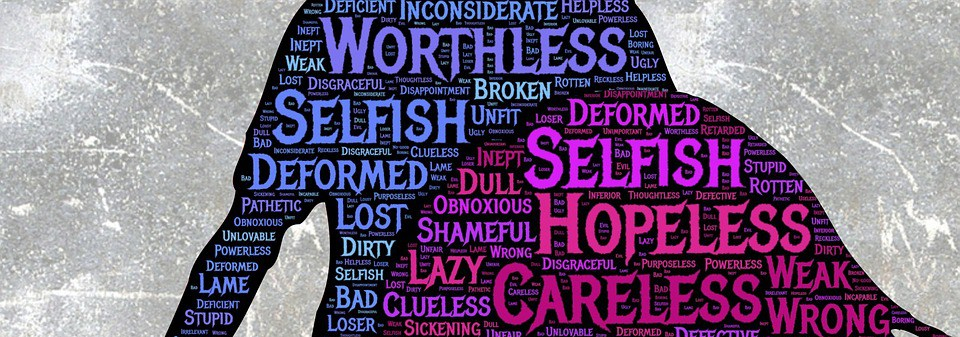
An internal voice of self-criticism does not seem like something anyone would desire yet it is an almost universal human experience.  For many, the accusatory dialogue of not being enough or not doing enough is a record that plays on repeat.  It spins again and again on that same track, causing us to spend our energy focused on what we did not do or we what “should” have done, leaving us in a state of regret.

Despite making us miserable, many of the maladaptive practices we use are effective and have some short-term gains…that’s why we keep doing them!  There is a lot to be said for the motivation that can come from telling yourself that you/your efforts aren’t “enough.”  We somehow trick ourselves into believing that if we are mentally whipping ourselves then that must mean we really care.  People who have relied heavily upon being discontent to accomplish their goals often fear letting go of that critical voice.  It has been their familiar motor for so many years.

In addition to being addictive, the external results of self-criticism can also be alluring when they are disguised as drive and ambition.  The shiny version of self-criticism often draws the admiration of others as they observe just how hard we are working as we internally sacrifice our self-care and our self-compassion.  While we lose our sleep, our health and our sanity seeking a self-established “enough”, others praise us for the commitment we have to “excellence.”

The reality is that regularly engaging in self-criticism can cause us to work ourselves to death or at least make us miserable along the way.  Making the choice to switch to a practice of self-compassion yields far more growth and motivation over time (and certainly less internal damage!) than criticism on repeat.  We were not designed to be the subject of constant abuse from anyone, especially ourselves.  We were designed for love.

Self-compassion mimics the voice of God.

Self-criticism?  That’s the other guy.

It is with this delineation that I will share one other secret about self-criticism.  While it feels like humility, the constant internal suggestion that you should always be “more” can actually be a sneaky little voice of pride.  True to his nature, it is actually the other guy enticing you to act like a god as you think you should be able to do all things at all times and be all things to all people.  Pretty sure he tried that same seduction on Jesus in the desert and He told that devil where to go.  Maybe we should too.

Practicing self-compassion sounds something like this…

I’ve been forgiven, and I forgive myself.
I’ve been given grace, I will be patient with myself.
Kindness makes me stronger, not weak.
I will grant myself the same compassion I extend to others.

It is my hope today that you can begin to take steps away from the critical voice that may plague parts of your life and begin to practice self-compassion.  When we put God’s voice on repeat in our heads we are much more likely to accept and live in the center of who He says we are and love those around us from that same perspective.  Now that sounds like the record I want to listen to.