What We Can Learn From Sarah & Rebekah

This Mother’s Day devotional was published over at The Glorious Table! Enjoy the preview below or click here for the full post: What We Can Learn From Sarah & Rebekah

mamas-messes

This year, I have been reading through the Bible in exactly the way people tell you not to, from front to back. This is not some holier-than-thou hero effort; it’s simply that I just don’t need any more multitasking in my life right now. I have young children, and I just don’t think I can manage one more switch in my brain, even if it is from the Old Testament to the New. So, along I read, trying desperately to stay present in these old stories, occasionally spending my days learning who begat who begat who.

Going through the Bible in this way has been an interesting process. I have read many of the accounts before, but typically in isolation. Adam and Eve in the garden. Noah and the Ark. Abraham, Isaac, Jacob. It is a different experience to read the stories in order as they tie into and influence one another. And, as irreverent as it may sound, I just keep having one particular reaction over and over again.

It is all so dramatic!

We have seriously been a broken, manipulating crew from the get-go. I find myself literally slack-jawed over and over again as dudes try to pass off their wives as their sisters (Genesis 12:10-2020:1-1826:6-11), pull tricks to steal blessings (Genesis 27), or swap one daughter for another to get more work out of a guy (Genesis 29:15-30). Truly, it’s a hot mess at times.

Oh, and the ladies? We don’t get a pass. Those Old Testament gals created some pretty impressive scandals, with their actions, premeditation, and willingness to use their influence to get what they want for themselves or their children. My initial reaction is usually, “Goodness, that was super messed up.” Until 2.5 seconds later, when the Holy Spirit kicks in and I am humbled into prayer, “Lord, help me learn from these women.”

You see, the call for us to avoid judgment (Matthew 7:3-5) does not just apply to our interactions with modern-day people. We are called to remain in a position of humility and learning toward everyone, of every age, no matter how seemingly inapplicable it may seem at the time. History always has lessons to teach us. So let’s learn from these gals because like it or not, we all reflect some part of these women; we’re just dressed up in modern clothes.

The two gals we’re going to learn from today are Sarah and Rebekah. The most well-known missteps of both of these women were tied to their children. They both spent a portion of their lives barren, and in fact, Sarah became so distressed waiting to conceive that she ended up giving her husband another woman, and he initially had kids with her instead (Genesis 16). Rebekah had a shorter wait for pregnancy but then, after she was blessed with twins, she loved one child more than the other (Genesis 25:20-28). There isn’t space here to go into all the craziness that followed, but suffice it to say that these initial lapses in judgment were not isolated incidents. Like so many of us, these women tried to live by God’s standards, but when they got too desperate, or their desires outpaced God’s timing, or their plans eclipsed God’s own, they slipped right back into those old controlling habits—and it got messy.

A woman who wants something so much and is so tired of waiting on God that she takes matters into her own hands? Uh, yes. I believe I recognize her.

To read the remainder of the post click here.

COVID-19: Managing Reentry Differences

Anne Rulo COVID-19: Managing Reentry Differences

Hold tight folks, things are changing again. And now, even though we’re moving in the other direction, it will require adjustment. Reopening is going to have its own challenges, just as the shutdown did. But they’re going to look a little different.

One of the interesting differences about reopening is that our experiences are going to be more varied. When we entered isolation we were either essential or we weren’t. That, along with support/family structure, determined a lot of what we experienced. But reentry? We have more choices. And, while choice seems positive, it also carries the increased opportunity for comparison and conflict. In short, there is the potential to get frustrated with how others decide to handle this.

For some, reopening couldn’t happen fast enough. It’s not a wish for flippant freedom. There is real distress tied to real needs. Reopening allows them to earn a paycheck, re-open the business that feeds their family or get the “elective” healthcare that alleviates their pain.

For others, reopening is terrifying. Isolation provided comfort as vulnerable individuals faced what the coronavirus could do to them or their families. They do not want others, or the economy, to suffer but they stare at those concerns through the lens of death. This is not a choice. And, it grants us pause should we think anyone is being “too cautious”.

But, as with most things, the majority of us will be somewhere in the middle. We are about to make a bunch of decisions about how cautious we want to be — and make those choices alongside others who may or may not feel the same way.

Per usual, there will be strangers (in-person or media) offering opinions that push against our own. Feel free to engage, listen, or disconnect. This is the more global part of defining our boundaries. However, it is the boundaries we will navigate in our personal relationships that have my attention. Because the weeks, likely months, ahead could be…sticky.

In a pre-COVID world where being with friends and family did not potentially equate with illness or death, we just had to decide if we had the time or desire to be together. It’s not as easy now. Decisions about friendships, family gatherings, play dates, travel, and physical touch are all evaluated with an asterisk. An asterisk that some people put more emphasis on than others.

The central message is this. We want to get on the other side of this mess with our families and friendships intact. And, that will require us to be really patient and empathic when we find ourselves on different pages.

Here’s what those different pages might look like:

  • I’m ready for my kids to play with their friends. Their families aren’t ready yet.
  • I am not ready to see my neighbors but they asked if we would come over.
  • I invited my coworker out to lunch, she says she’s not ready for restaurants yet.
  • Everyone else has taken their mask off and I haven’t. I hope they will support me.
  • I’m ready to see my grandchildren. Their parents are more cautious.
  • My adult children want to visit. I want to see them but I’m scared about my health.
  • I want to plan a summer vacation, my spouse is nervous to travel.
  • I just want to give my friend a hug, and she would like one but it feels too risky.

The differences are almost inevitable but conflict over them does not have to be. Here are some tips for navigating differences of opinion on the “right” way to reenter.

  • It’s okay to share that you have a different opinion and how that makes you feel (i.e. I’m sad I don’t get to see you but I’ll respect where you are). It is going to be less well-received if you insist you are right, they are wrong, or use your emotional reaction to guilt the other party.
  • Remember that this experience continues to be temporary. You figured out how to make modifications to stay connected during isolation. It’s worth considering if you want to be in conflict over these differences or continue with the modifications to remain connected.
  • Your boundaries, especially if yours are more restricted, are okay. You do not need to feel bad about prioritizing your safety or your health. Be okay with hearing that people miss you and want to be with you. Try not to hear it as criticism. Ask for respect if it is.
  • Empathy. People are going to have so many reasons (realized and unrealized) that go into how they choose to reenter. Empathy does not require understanding, it just requires care. I can love you for who and where you are even if it makes no sense to me.

It feels like I have said this so many times already but I’ll say it again, hang in there folks. This is hard. This is long. But, however we want to approach our coming freedom will hopefully not be worth sacrificing our relationships over. Love people. Be patient. Be kind. We will get there.

Image by Ulrike Leone from Pixabay

COVID 19: Types of Grief

Anne Rulo COVID-19: Types of Grief

Grief is a heavy word. It carries the suggestion that you have lost someone, or something, very significant. However, the grief process can also accompany other experiences. Really, all that is required for grief is loss. And, as we can all attest, this experience with COVID-19 has certainly created some losses.

This term, “grief”, often gets used as a single concept but there are actually a few different kinds of grief. And, because of the nature of this pandemic, we have the potential to encounter several of them at the same time. I don’t share this to “over-label” our experience, but instead, help inform us about the different ways we may be mentally and emotionally impacted during this time. When we know better we can cope better. And, when we can cope better, it gives us the ability to move through difficult experiences in a more informed way.

Alright, this is not an exhaustive list, but let’s look at a few types of grief.

Grief – This is what we are already experiencing to varying degrees. Grief is, simply, our body’s reaction to loss. It can affect us emotionally, cognitively, physically, and spiritually as we cycle through shock/denial, anger, sadness, acceptance, hope, and reconstructing a new normal. The very nature of the COVID-19 pandemic has created some “loss” for every one of us. Whether it be loss of control, loss of connection with others, sadness over those things that have been canceled, missing our old routines, etc. we are all trying to cope with the existing grief already accompanying this strange current reality. And, while that is enough, it is possible that we may be experiencing other types of grief as well.

Anticipatory Grief – While grief is our body’s response to something that has been lost, anticipatory grief is what occurs when we consider what we could lose. Typically associated with the grief experienced when someone is dying of a terminal illness, this is our body’s way of trying to “prepare” us for what’s coming. When we apply this to COVID-19, it is certainly possible for us to experience anticipatory grieving. Examples of this may be thinking about the possibility of losing a loved one, a job, wondering if we need to cancel a summer vacation, or what might happen to school or sports in the fall. It is uniquely focused on what we could lose, added to the grief of what has already been lost.

Cumulative Grief – This is exactly what it sounds like. Cumulative grief is what we can experience when more losses are added before we had the chance to get through what has already happened. Cue COVID-19 and the ongoing nature of canceled experiences, extensions of social distancing, and the impact of this getting more personal and we are prime for some cumulative grief. It is a unique psychological experience because several losses are being experienced at the same time but cannot be grieved all at once because they each carry their own individual importance in our psyche.

So, what do we do? As we can see, the multi-layer experience we are having through COVID-19 can make for a pretty big grief sandwich, one that is super hard to swallow. We can’t pretend we haven’t lost stuff, because we have. We can’t pretend we won’t lose more stuff, because we probably will. And we can’t just “get over” the losses we’ve already had just to manage the ones that are coming. We are just going to have to eat that sandwich one bite at a time — as we are designed to.

Grief, especially the complicated grief we may be experiencing, can only be taken in segments. There is no way to take it in all at once or “get over it” in one fail swoop. Just like this pandemic, our experiences of sadness, anger, shock, and loss have to be taken one day at a time and some days are going to go better than others. And, as the days come, here are some reflection questions that may help you move through in a healthy way. Just a little bit at a time.

Where is this day’s grief coming from? Simply identifying the part of the loss that is bothering you can help increase awareness and focus your coping strategies.

How is my self-care? I know this advice may sound like a broken record but investing in your own “recovery” each day is essential. If you don’t fill up you won’t have anything to pour out in the effort to move through your own grief. And grieving is hard work.

Am I connecting with compassionate people? There are people (personal or professional) who are going to be helpful for you during this time and those who aren’t. Make sure you are making efforts to connect with people who fill you during this time.

Am I making space for happiness/positivity? Just because we are grieving doesn’t mean we can’t authentically experience other emotions throughout the day. Watch things that make you laugh, revisit old memories, feel free to be silly. Grief does not have to rule the day, it just asks for a place here and there.

Almost all of us have been through at least one intense grief experience in our lives —and you made it. It changed you, and it was hard, but you made it. Remember, you aren’t alone, we are quite literally all in this together. And we will make it through again.

Photo by Nishta Sharma on Unsplash


COVID 19: Reflect Now, Remember Later

Anne Rulo COVID 19: Reflect Now, Remember Later

This week has seen increased discussion, and even some action, around how the world is trying to ease out of this unbelievable pandemic. Locations where the virus started are open for travel and some European countries are reducing restrictions. And, while things have not changed in the United States yet, officials are beginning to outline how people, and businesses, may reenter normalcy as swiftly and safely as possible. In short, there does appear to be a light at the end of the proverbial tunnel — even if it is in the far, far distance.

I’m happy about the progress. Really. I know people are suffering. I want our healthcare workers to feel safe again. I want our business owners to open their doors again. I want our children to see their friends again. I want to hug my Mom. Man, do I really want to hug my Mom. And yet? As the discussions ramp up and the changes begin, I don’t want to be distracted from being present. Or even worse, forget what I’ve learned.

Oh, please. Don’t let me forget.

You see, as hard as it has been, this unprecedented time has also fed my soul and blessed our family in ways we would never have experienced otherwise. “The Great Pause” as some have coined it, has quite literally forced us to live in the reduced busyness and consumerism I always longed for. And, we have discovered joy in living on far less than I ever would have imagined.

It is for this very reason, if I am deeply honest, that my joy at the end of the coronavirus will also be accompanied by a kind of grief. Competing emotions are normal during transitions, even good transitions, and I sense it even now as I see the wave of “freedom” rolling slowly our direction. Because when it arrives, we will not only have the freedom to enjoy the wonderful things, but we will also have to face old temptations again. And, there’s more than a few I’d like to leave behind…

Like the “freedom” to be too busy again. To look in the fridge and go to the store on impulse, rather than with forethought. The freedom to chase the idol of productivity and the identity of accomplishment. The temptation to over-involve our children and the freedom to say yes far too often. To unfairly limit what “normal” looks like and to think “I need” when the truth is “I want”. To buy into the old lies and lose ourselves again in it.

No, I don’t want to forget. Instead, I want to reflect now so I can remember later…

That perfectly fine family meals were created (and money was saved!) from cooperatively staring into the pantry and seeing what we could make up so we didn’t have to go to the store.

That while our children were away from their corporate activities they did not stop growing, they just grew in other beautiful directions.

That I was just as valuable to myself, my friends, my family, and my God when I couldn’t go running around marking off my to-do list.

That I wasn’t stifled by social immobility, rather, it made my mind move in new ways.

That unscheduled time organically gave way to rest, laughter, worship, and reflection.

That so many parts of this time were so, so very hard. But, so many others were beautiful. And those are the ones we want to take with us.

Let this time matter friends. Don’t let the coming wave of freedom and change distract you from the incredible moments that are happening now. And, when it comes, don’t let it make you forget what you learned. This “Great Pause” has meant something for us — it has awakened us. May we stay that way.

Photo by NeONBRAND on Unsplash

God Sees Everything

Something I wrote over at The Glorious Table weeks ago published today. While much has changed since then, God has not. It was a good reminder that He still sees each of us in the middle of the whole world hurting. Gracious, He is amazing. See below for a preview or read the full post here: The Glorious Table “God Sees Everything”

You Are On God's Refrigerator

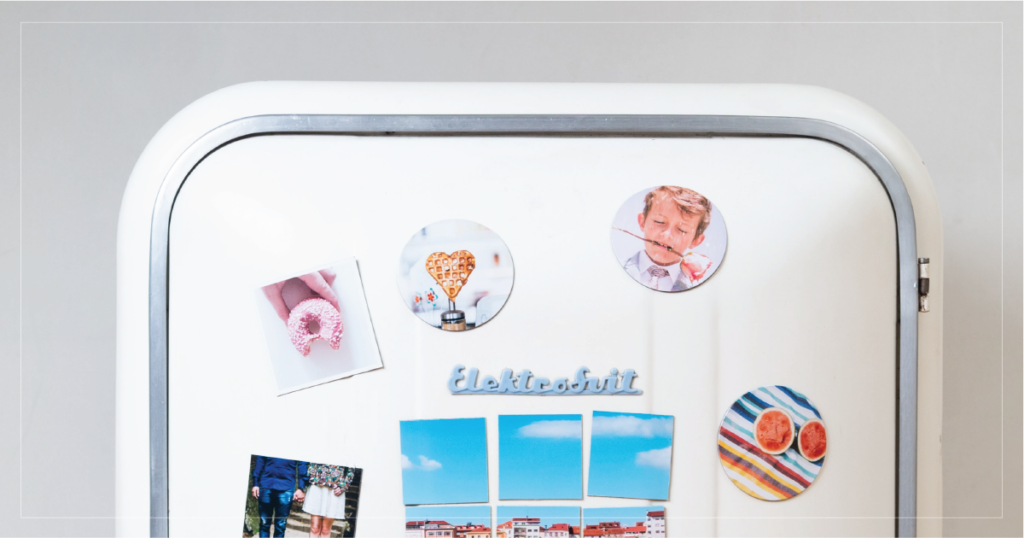
Like almost every other family with small children, I have a rather well-decorated refrigerator. It’s where we keep the most impressive, or at least the most recent, of my children’s creations. There is also a large basket, strategically placed under a rather tall dining room chair, constantly overflowing with whatever is not on the fridge. Between worksheets, crafts, coloring pages, and homemade cards, this self-perpetuating pile continues to grow despite my best efforts to strategically (read: secretly) dispose of at least some of it at the bottom of the recycling bin.

I know many parents will be able to relate when I share that I recently got caught by my eldest. He is the childhood embodiment of an elderly statesman, committed to justice and righteousness at all times.

This is how it all went down:

[Eldest child enters the garage, gasps,] “Mom! My stuff is in here! And there is some of Charlotte’s stuff too! WHY w


ould you throw our stuff AWAY? These things are PRECIOUS to us!” [Cue crying from the statesman and the innocent, who are both now wounded to the depths of their souls.]

Oy vey. Their collective grief was so strong and his tone so indignant that I admit, I didn’t handle myself with the highest integrity. If I remember correctly, I stammered out something about having put it in there by accident, or I didn’t realize it was an important paper, or with some other parental backpedaling of the kind we are prone to in these moments. I grabbed the papers back out of the recycle bin, walked them slowly into the house, and put them right back under that tall chair in the overflowing basket where they had been only a few hours before.

Later that evening, as I shared the debacle with my husband, I was attempting to figure out how to lovingly but firmly let my children know that while I appreciate their work, it is actual insanity to keep everything that matters to them. No matter how much I love them, there is no way as a parent to fully embrace every mark of growth and creativity in the limited space and capacity we are given.

And then this beautiful thought emerged.

God can. And he does.

God sees everything.

To read the full post go to The Glorious Table here.

COVID-19 Life: Brain Change Takes Time

Anne Rulo - COVID-19 Life: Brain Change Takes Time

Earlier this week I looked at my son doing work on the iPad, my daughter playing in the living room and overheard my husband on a Zoom meeting and noticed that it felt almost…familiar. Not normal yet, but certainly familiar. I have to admit, the sensation was refreshing.

Since all these changes happened in our lives, I have felt a little “off”. Simply the process of waking up or reading the news was like a weird dream and our family rhythm has been out of sync. Common, everyday tasks seem to require more energy than usual. And, no matter how hard I try to adjust, I just can’t seem to get this new normal figured out as quickly as I would like. I was starting to get kind of frustrated with myself for not adapting as quickly as I thought I “should”, that is, until high school biology came rushing back to me.

Remember high school biology? That’s where we learned about homeostasis.

Yep, homeostasis. This concept is at least part of the very normal reason why so many of us have been experiencing a delay or disorientation in our adjustment to COVID-19 life. In fact, it’s part of the reason why, in general, we often have a hard time with change. You see, the basic design of our body is to keep us in homeostasis. Every system is designed to keep us at a set point; temperature, chemistry, balance, etc. And, our brains operate in a similar way. So, those neural pathways we previously had in place for our daily routines, work, and family patterns? They were well established, and we can’t change them instantly. Kinda’ like wearing a new path in your yard, it takes a while for the routes we were taking to “grow over” and for the new one to wear in. In fact, depending on which studies you read, it takes about 10,000 repetitions or a couple of months to form a new neural pathway for thought, routine or behavior. In short, we cannot force our brains to change faster than they are designed to.

So, what does all this have to do with our current situation? It means we can relax a bit and be patient. Rather than trying to force ourselves to feel comfortable in this new reality, we can chill out for a second and trust that our brains, our emotions, our behaviors, and even our family dynamics will get there eventually, as they are designed to. We need to remind ourselves that even if we aren’t actively trying every moment to adjust to COVID-19 life, the very nature of our different circumstances will continue to “encourage” our brains and bodies to adapt. Rather than being frustrated when we aren’t seeing measurable progress, we can be kind to ourselves and remember that our brains and our bodies are trying the best they know how and they will get us there eventually.

Try not to push too hard friends. Honor your design and take it easy on yourself. We really are getting there and we are going to notice it more and more as the days go on.

*For anyone who is looking for a more in-depth (and exceptional might I add) read on how our brains respond to crisis please check out Aundi Kolber’s recent release “Try Softer”. Her words are a timely, well-researched and helpful resource right now.

Photo by Alina Grubnyak on Unsplash