If Covid Stole Your Grieving Process

Throughout our lives, we all experience “transition touchpoints.” These moments are significant to us not only personally, but psychologically. There is a reason why people often tell stories about giving birth, getting married, graduations, the “first” time this happened, the “last” of something, etc. These “touchpoints” not only mark the transition, they often help us mentally and emotionally work through them.

One specific touchpoint that has always served as a sacred transition is the marking of someone’s passing. While funeral traditions vary greatly from culture to culture, there is always something. A ceremony, gathering, processional, a way of treating the body, a process of honoring that person’s life and offering comfort to those who knew them.

One of the greatest tragedies of the pandemic is the immense loss of life compounded with social restrictions that altered funeral traditions or eliminated them completely. Whether you lost someone to COVID-19 or for other reasons, your “touchpoint” to deal with that loss was likely impacted in some way. Given the essential psychological processes we all need to go through when we lose someone, this has left people feeling “stalled” in their grieving. If this is you, or someone you know, here are some suggestions for reclaiming that important mental and emotional grieving process.

Anne Rulo If Covid Stole Your Grieving Process

Ways to Reclaim the Grieving Process the Pandemic Took Away

Have the funeral later, or again. If you lost someone at the height of pandemic social restrictions, you may not have had a funeral. Or, if you were able to, you may not have gathered all the people you wanted, in the place you wanted, or engaged in certain traditions. I recognize that funerals can be costly and exhaustive both financially and emotionally. However, if you have the means and the desire there is absolutely no reason not to have that important ceremony at a later date if you need/want to.

Create a personal grieving ceremony(s). Depending on your resources or decision-making ability related to the person you lost, you may only be able to create a personal grieving experience. I have had many clients who felt stalled in their grieving over someone they lost when they were young, couldn’t attend the service, etc. Many of them have designed their own moments, as simple as reading a letter by a lake, visiting a graveside, etc. Remember, it is often not the physical magnitude of something that helps, it is the intentionality.

Grieve the way it happened. If so far you are saying, “Nope, I don’t want to re-do/re-visit any of that. I’m just struggling with the way it all happened.” Great. It’s important to figure out if we need the ceremony/traditions or if we need to just grieve how the ceremony did (or didn’t) happen. Lots of people experience disappointment around touchstone moments that don’t go as planned. In these times we are seeking to forgive and make peace with what didn’t happen, rather than create a corrective experience.

Talk to someone. Grief is not a one-time experience. And, the impact of the pandemic ensures that almost all of us are encountering some kind of grief, even if we did not physically lose someone. Mental health therapists are trained to help people filter through thoughts, make meaning of their stories, identify pain points and help you better help yourself. One of the most valuable things to come out of the pandemic is as long as you have access to the internet, you can have access to a counselor. Seek one in your local area or consider these virtual options:

Better Help or Faithful Counseling (faith-based)

Remember, just because you are “still” grieving doesn’t mean something is wrong. Grief is not something you “get over.” It is a cyclical part of our connection with those we have lost (read more on that here). However, if you feel specifically stuck related to a loss during the pandemic, one of the options above may be helpful. Blessings in your grief journey.

Photo by Gabriella Clare Marino on Unsplash

The Fellowship of Grief & Hope

Grief and hope are supporting partners, each allowing the other to exist in authenticity. This is the first of two blog posts in a two-week grief series. Thank you, as always, to The Glorious Table for the privilege of writing for you. See the preview below or link here for the full post.

The other day, a friend sent me a meme depicting two people on a track. The person in the back is running at full speed, quickly gaining on the other. This sprinter is labeled “Beginning of 2022.” The person he’s about to catch is labeled “Me Still Trying to Process 2020.”

Now, if that’s not the truth in one picture, I don’t know what is. How can it possibly be almost 2022 when we’re still trying to get our heads wrapped around all that’s happened during the past two years?

The journey through this time has been like nothing else I’ve experienced — like nothing any of us has ever experienced. The global scale of human loss, financial devastation, impact on mental health, racial reckoning, and political polarization has been hard to watch on our news feeds. The way each of these things has manifested in so many lives has been difficult, if not devastating.

Additionally, the ongoing stress of these past two years has made “normal” challenges so much more so. We experienced a few normal stressors like moving, sending my youngest off to kindergarten, and the loss of a few distant loved ones. These are common events, but I could sense that my usual bandwidth for coping was much narrower because of the ongoing toll of the pandemic.

The Fellowship of Hope and Grief

And yet, even in the midst of this time of difficulty, a familiar hope has buoyed us, because that’s what it’s designed to do.

In contrast to how strange and uncommon the pandemic has been, the way hope has shown up these past two years has been remarkably familiar. Rather than being unusual and otherworldly, it has been common, and it had shown up in much the same way hope has shown up for generations of people when they encountered difficulties. Hope is not “unprecedented.” Hope is the consistent thing God has always used to help his people in difficulty, through himself and one another.

As we move toward wrapping up another year of this strange era, I wanted to reflect on a few of my favorite examples where grief and hope have joined hands in fellowship, buoying the people of God during a strange time with hope familiar.

When Grief and Hope Go Together

Jesus in the Garden: As a person of faith and a mental health therapist, the example of Jesus in the garden is central to the teaching that grief and hope can exist in the same space. In the deepest personal and existential pain anyone has ever faced, Jesus turned to his Father. The Source of hope turned to the Creator of hope in order to persevere, ultimately allowing him to give us the greatest gift humanity has ever known.

For additional examples and to finish the full post link here.

Why We Are All Losing in the “Generation Wars”

I have an embarrassing story. Last spring, on a Sunday morning, I spent an unusually long amount of time fixing my hair. Do you know what I was doing? Putting my hair in a center part. Then a side part. Then a center part again to see which one looked better.

Then, if that insanity wasn’t enough, I carried the preoccupation with me to church. As I settled in our usual spot, I watched the women. Younger women, older women, seeing which ones had center parts and which ones had side parts. Suffice it to say, my mind was not exactly where it probably should have been.

Here’s the weird thing, I didn’t really care. I was mildly amused by the center part/side part debate. What struck me was that despite not caring, these debates and clickbait headlines were still affecting me. That’s when this post came to my head.

Now, I know it seems like I am being way too serious about something silly but, indulge me. My distraction and briefly altered behavior that morning got me thinking about the generation wars popping up over the last decade or so. Examples: the criticism of millennial work ethic, backlash insults by saying “okay boomer” to older people, the Gen Z one-upmanship, and the Gen X eye-rolling at all of it.

I just don’t think it supports anyone’s mental or emotional health to be intentionally seeking out (or told) why other people suck. Let’s explore.

Anne Rulo Why We Are All Losing in the "Generation Wars"

How the “Generation Wars” are Working Against Us

Younger Generations: Adults have been frustrated with “kids these days” since there were kids. In truth, much of this criticism results from their unique journies to adulthood in the context of their generation. The people who had children in the ’40s thought ’50s kids were wild. Many ’50s parents thought hippie kids were losing it. And, you can be sure Gen Z kids will get frustrated with their children as they navigate the experimenting, independence, and light-to-moderate rebellion that is developmentally normal for young people.

Are there kids making big mistakes or being selfish? Yep. But, the majority of them turn out alright. Are there young people operating differently in work and social settings? Yep. But, they are also using unique and powerful ways to connect and create change. Are we missing out on encouraging them, getting to know them, affirming them, and mentoring them by believing our way must be better? For certain. We can’t effectively raise the next generation by only telling them how they are different from us. We must also seek the beauty in what they are doing and spur them on.

Let no one despise you for your youth, but set the believers an example in speech, in conduct, in love, in faith, in purity. 1 Tim. 4:12

But the Lord said to me, “Do not say, ‘I am only a youth’; for to all to whom I send you, you shall go, and whatever I command you, you shall speak. Jer. 1:7

Older Generations: Now, I don’t know who started it, older people criticizing younger ones or younger ones fighting for their validity. Regardless, we now have a strange pattern pointing out how previous generations messed up, are incapable of using technology, or can’t adapt to new ideas. In an effort to establish our generation as “the most right” we seem to have sidestepped the beauty of learning from those who have lived long lives, gained great wisdom, and have something to teach us.

Are there older people who messed things up? Yep. But, part of the reason for that is because they’ve lived long enough to make big mistakes. We need to be careful with our stones. Are there older people who are slow or refuse to learn new things? Yep. But, they’ve also seen plenty of advances in their lives and they might have some wisdom about what matters. Focusing on how older people “don’t get it” often just makes us miss the countless ways they do. We are missing out on a rich well of wisdom by thinking Google has all the answers.

Wisdom is with the aged, and understanding in length of days. Job 12:12

They still bear fruit in old age; they are ever full of sap and green, Ps. 92:14

Do not cast me off in the time of old age; forsake me not when my strength is spent. Ps. 71:9

The Vulnerable: Okay, last one. When we pit generations against one another, no matter how lightheartedly, it creates tension and division. And, while you may be able to set this banter aside, not everyone can. Those vulnerable to a critical spirit, jealousy, defensiveness, or family strife are negatively impacted. It may be a joke, but these “generation wars” have real-world consequences for the unity, peace, and appreciation that would likely do us all a lot more good. Some people just struggle to separate jokes and satire from truth.

So, there’s my offer for the day. As amusing as the side-part vs. center-part generation battles can be, there is a bit of an underbelly that seems to be working against appreciating the beauty every generation brings to the table. May we seek the good in one another and use our wisdom to raise one another up, rather than tear one another down.

And let us consider how to stir up one another to love and good works, Heb. 10:24

Therefore encourage one another and build one another up, just as you are doing. 1 Thes. 5:11

Iron sharpens iron, and one man sharpens another. Prov. 27:17

Photo by Jana Sabeth on Unsplash

What is Toxic Positivity and How Can We Avoid It?

This week’s post is published over at Missouri Partners in Prevention. In this month of thankfulness and gratitude, it’s important to remember that even those great things can be taken to an extreme. Here’s to embracing and learning from all our emotions, not just the ones that feel good. Full post here or preview below.

Years ago, I had a friend who was facing a very difficult time. Her marriage was struggling, and she was also having some challenges at work. As we sat together, she would share a bit of what was bothering her, stop, apologize, say something like, “But other people have it so much worse than I do”, and then try to express her pain again. For the fifteen minutes we were together, the pattern continued:

Share difficult information or emotions.

Stop.

Express guilt for what she shared.

Try to put a positive spin on it.

Repeat.

It was hard to watch her struggle, knowing she was in pain, but also knowing she was uncomfortable fully expressing herself. To be clear, this is no criticism of her. Despite my assurance that she could be as mad/sad/disappointed as she needed, the pressure to “stay positive” affects many of us. It’s one of the side effects of living in a culture that often promotes toxic positivity.

What is Toxic Positivity?

Toxic positivity is the pressure to maintain a positive, upbeat perspective no matter how difficult or upsetting a situation may be. Rather than acknowledging and allowing the good and difficult aspects of life to coexist, this extreme allows only positive emotions, shutting down authentic expression. Of course, having an “attitude of gratitude” and optimism has benefits, but those approaches are not intended as replacements for honestly dealing with difficult circumstances and emotions. In general, people do not do well mentally or emotionally when they feel one way but try to force themselves to feel another.

Why Do We Engage in Toxic Positivity?

Toxic positivity can be directed inward (as in the above example) or toward others. This overly positive approach usually happens for one of a couple of reasons: 1) we aren’t sure how to respond, so we try to say something positive, 2) we are distressed by someone else’s distress, and we just want them to feel better, 3) we are uncomfortable “sitting” with hard emotions, so we try to elevate the situation.

It is important to realize that almost all of us do this at one point or another because hard emotions are just that…hard. It is very natural to try to make difficult situations better. But we are going to do ourselves (and others) more good if we can learn to respond in ways that allow authenticity, rather than avoiding pain, offering false positivity, or inadvertently shaming people in their suffering. All of these can be unintended consequences of toxic positivity.

How Can We Avoid Toxic Positivity?

For six ways to avoid toxic positivity, link to the full post here.

Just Because You CAN Do More This Holiday Season Does Not Mean You Should

I wanted to be the very first to welcome you to the holiday season! I’m one of those obnoxious people who overly-revels in this time of year. I love the Christmas stuff in stores months ahead of time, I play the music way too early, and you better believe the new tree I ordered is going up soon.

Aaaand, as a mental health therapist, introvert, and general self-proclaimed protector of human energy, I also wanted to remind you of this. Embracing the holidays does NOT mean you have to be busy, overwhelmed, or constantly checking the to-do list. You can just be a normal, non-high achieving individual and enjoy the holidays just the same.

Anne Rulo Just Because You CAN Do More This Holiday Season Does Not Mean You Should

There are seasons in life (not just holiday seasons, but stage-of-life seasons) where we seem to think we are supposed to be on hyper-speed when it comes to planning, achieving, checking things off the list, etc. For perfectionists and those who receive validation from “gettin’ stuff done” this fuels all those endorphin-rewarded neurons in our brain as we pat ourselves on the back for putting in yet another overly-packed day of tasks and accomplishments.

My fellow humans, this is not sustainable. Nor is it how we are designed. Let’s consider a few reasons why we may want to take a different approach to the upcoming holiday season:

  1. Recovering from the Pandemic: The pandemic has been a wearying experience. The fact that we can safely do more this season makes it tempting to do all the things. Kinda’ like a holiday binge but with togetherness, activities, and forcing all the nostalgia and traditions back in place. This may be a bit much to take on all at once as we continue to recover from this weird time in history. Consider your choices carefully.

  2. Challenging the Stuff that Validates Us: Achievement can be very intoxicating. Many of us are conditioned to equate our value with what we accomplished that day. The holidays are such an opportune time to reflect on the Truth of what actually makes us valuable, but the busyness of the season often pushes us out of that space. It might be really incredible to see what a holiday is like when we don’t do all the things.

  3. Missing People as We Chase Productivity: This may be the most important. We are forever trying to be Mary in a Martha world, but it’s hard. We have missed countless moments with people because we were cleaning our houses, preparing the food, trying to get organized, or orchestrating a “moment.” I am so, so guilty of this. Just because things have to get done doesn’t mean they have to get done perfectly. An uncoordinated, unpolished holiday season may be just what fills your heart.

So, there it is. Just ahead, the holiday season of 2021. This is the moment where we see if all those important lessons we learned during the pandemic will stick with us or if we will be drawn back into the hustle. I’m hoping if we make plans now, we can settle into being average people who do average stuff in average ways and, in doing so, enjoy a miraculously beautiful, restful, soul-filling holiday season.

Dreams, Nightmares, & Mental Health

Writing this week over at Missouri Partners in Prevention! See the preview below or link to the full article here: “Dreams, Nightmares, & Mental Health”

At the end of October, with all the spooky themes and Halloween fun, it seemed like a good time to talk about dreams, nightmares, and how sleep plays into our mental health.

It is generally recommended that adults get between seven and nine hours of sleep a night. During the time we are asleep, our brain “cycles” through different sleep phases, one of which is REM (rapid eye movement). This is the part of the cycle where dreams and nightmares occur.

One full sleep cycle, on average, lasts between 90-110 minutes as we shift between shallow and deep sleep. Interestingly, REM sleep takes up more of each cycle as the night goes on, with the longest periods taking place in the final hours of the night. That’s why, if we don’t get a full seven to nine hours, we are likely missing out on some of the most important hours for our mind to dream.

Function & Benefits of Dreaming

Dreaming is a healthy part of our sleep cycle, used for several functions including building memory, processing emotions, and determining which information to keep and which to discard. Another function of dreaming is to process situations, both those that already happened and those that may be coming up (i.e., dreaming about a test that you have the next day).

In a very interesting piece of research, Dr. Matthew Walker, author of Why We Sleep: Unlocking the Power of Sleep and Dreams, refers to dream sleep as “healing sleep” and “overnight therapy.” He suggests that during REM sleep, our brains are clear of the stress chemical noradrenaline. As such, in a dream state, our brains are in a safer space to re-process upsetting information and heal (Walker, M. P., & van der Helm, E. (2009).

Additionally, there are also categories of dreams. Some of these include “day residue”, which is simply an influence of the previous day’s sensory intake. “Lucid dreams” where people are aware they are dreaming and can actively control what happens next (i.e., fly where you want in your dream). Also, recurrent dreams are very common, often related to stress or anxiety. These may include teeth falling out, being naked in public, being late/unprepared, falling, or being unable to get away from danger.

So, What About Nightmares?

Nightmares are categorically different from dreams in one key way…

To finish the full post link here: “Dreams, Nightmares, & Mental Health”

Encountering Opposition to Transformation in Christ

This month’s article from The Glorious Table starts with me wearing a Rainbow Brite Costume. Preview below or link here for the full post.

Anne Rulo The Glorious Table Encountering Opposition to Transformation in Christ

When I was a child, my mom created the most wonderful Rainbow Brite costume for me. I don’t remember much about that Halloween, but I do remember how I felt. That costume was incredible. I remember feeling special, well-dressed, and proud of what I had transformed into as I wandered up and down the street, gathering candy with my friends. I am quite certain I got lots of compliments, and I would love it if that costume was still around for my own kids to use.

Fast forward to Halloween when I was a preteen. I chose to be a Kansas University Jayhawk. Having been born in Kansas, I loved the Jayhawks. We worked hard on that costume, covering my uncle’s old football helmet in red fabric and using parts of an old Pizza Hut box to transform the facemask into a yellow beak. I loved it, but I knew it wasn’t going to be well-received by everyone.

You see, by that time, I lived in Missouri. The Missouri Tigers reigned supreme for most of my friends and their families, and I stood alone in my decision to support the Jayhawks. In contrast to the love I received with the Rainbow Brite costume, as a Jayhawk, I got razzed. Mostly good-natured razzing, of course, but it was obvious that this transformation was not as acceptable as the cute one when I was a child.

Since it’s October, I figured these stories about my two costumes might translate well into an analogy about transformations in Christ.. Whether sudden or slowly over time, a life lived in Christ is going to change us. It’s supposed to change us. But the way those changes are received can vary. Like we just did with Rainbow Brite and the Jayhawk, let’s take a look at how transformations in Christ are sometimes received well but sometimes receive pushback.

To read the full post link here.

5 Strategies for Connecting with Low-Bandwidth Communicators

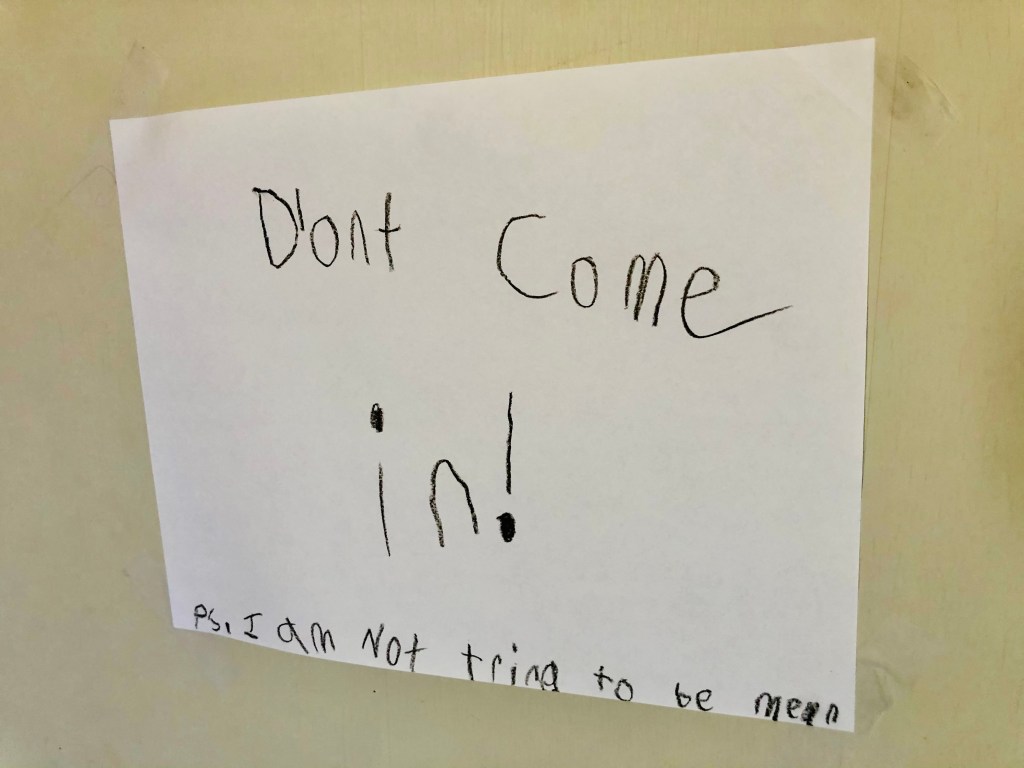
Last week I passed my six-year-old’s bedroom and started laughing. She had attached this message to her door.

Anne Rulo Low Bandwidth Communicators

Bless her introverted, empathic little heart. The poor thing is trying to figure out what it looks like to communicate she needs some space without offending the busy, often extroverted world around her. It’s hard to balance loving people while also needing breaks to refuel. This is the daily challenge for a low-bandwidth communicator.

There are a lot of reasons why someone may feel limited in their ability to communicate with energy and frequency. Introversion, a personality trait that craves quiet space and inner reflection, is certainly one. However, even the most extroverted person can be limited in their ability to communicate in times of stress, grief, or tragedy. And, of course, some people were simply not raised with strong, empathic communication skills. But, no matter the reason, all of us will sometimes find ourselves trying to communicate with someone who does not have a lot of words or energy to offer back. And, in those situations, here are my favorite tips for getting the most out of those precious few words or moments we get in return.

Give More Often Than Receive: This is a pretty good practice in almost any area of life but, with a low-bandwidth communicator, this can be especially helpful. It is important to remember that when people are introverted or under great strain, they are not retreating from you, they are retreating to gather their energy. Knowing this can help us not feel rejected. When you offer kindness and space you are helping them to recharge and be able to reconnect sooner.

Plan for Interaction: Can we always know when we need to talk with someone? No. But, low-bandwidth communicators are hyper-aware that their communication energy can drain quickly. Asking if they can chat in 20 minutes or “when would be a good time” can help them gather themselves for a more effective conversation than just popping in.

Send “No-Reply” Communication: This is one of my two favorites, especially for people who are under stress or grief. When we are under great strain, especially if many people are reaching out, it’s hard to get back to everyone. We can reduce the burden for folks in these circumstances by sending “no-reply” texts, e-mails, cards, etc. “I’m praying for you.” “No need to reply just wanted to say I love you.” and “Thinking of you today” is still offering support without also asking for a reply.

Ask for Specific Communication: My other favorite for low-bandwidth communicators is to ask for specifics. “Tell me two ways I can pray for you” is clearer than “How are you?” “Do you need your lawn mowed?” is more direct than “How can I help?” And, “Can you pick up the kids on Thursday?” is easier to focus on than, “Tell me your schedule for the week.” Of course, all of these options are valuable questions. But, when someone is trying hard to think through the fog of grief or a pile of details, these specifics can be helpful to get you back the information you desire.

Share Boundaries Around Your Needs: Ah, this is the one that will hopefully comfort all those saying, “But I have needs too! I want to talk with them. Be with them. Process my day!” Yep. The need to communicate matters just as much as the need to retreat and recharge. This is where we make a very clear distinction that the strategies offered here are for healthy situations where both people want to meet the other’s needs, even if they are different. The introverted man who loves his wife needs to know her needs so he can figure out how to meet her in her extroversion. The stressed-out Mom who loves her kids wants to make a plan to connect with them in a way that is satisfying to them. People may be different, but one of the best places to start helping a low-bandwidth communicator connect better with a high-bandwidth one is learning what they both need so they can each move toward the middle sometimes and serve each other in their extremes sometimes too.

May we all find ways to appreciate and meet one another in the diversity of our communication needs, skills, and ability.

How to Build an Altar

Today’s post is published over at The Glorious Table. It is the story of how I said goodbye to one stage of life by building a “mental and emotional altar.” This is a wonderful practice that can help us grieve, honor, and say goodbye when God moves us to a new stage of life. See below for a preview or link to the full post here.

Six years ago, I made a mistake. I was most of the way through my second pregnancy when things went a little haywire with my blood pressure. The doctor gave me a day or two to see if we could get things under control, but when I went back for a check-up, he walked into my room with the numbers in hand and said, “You are going to have a baby today.”

At that point, I was at a hospital almost an hour away from home. Apparently hoping for the best, I had brought nothing, packed nothing. When I said, “OK, I’ll just run home and get my things” the answer was a firm no. This sweet babe was going to arrive in the next couple of hours, and there was no time for dilly-dallying to get my cute post-labor robe.

Sensing the intensity of the situation, I called my husband, my mother, and drove as quickly as I could from the clinic to the adjoining hospital parking lot. I heaved my very pregnant self out of the car, hustled to labor and delivery, and was settled in my room lickety-split. As directed, my beautiful daughter arrived later that same day. Perfect. Healthy.

But a sadness I wasn’t expecting hit me in the coming days.

How to Build an Altar

This wasn’t postpartum sadness (although I’ve done that dance, too). This was something altogether different. This was regret. Regret that I hadn’t paused. Regret that I hadn’t taken a moment with her when it was “just us” to say, “Here we go, baby girl, I’ve loved our time together.” Regret that I had hustled through that time that needed to be honored. It took me a long, long time to get over that hustle.

Fast forward to this summer, and I had a chance to learn from that mistake. Because this summer was the summer when we finally sold our crib in the middle of a hectic move. We had used that crib for both of our babies. It had seen countless firsts and sleepless nights. We had experienced so many beautiful moments, and, as mentioned, difficult postpartum days. I had an attachment to that crib, as so many parents do to their babies’ belongings, and it was about to leave my presence forever.

So, unlike six years before, this time I sensed that I should stop. In a sacred moment, with my family members packing boxes inside the house, I stood in the hot garage, put my hand on that crib, and created a mental and emotional “altar.” And—I kid you not—it made all the difference in the world.

To finish the full post link here.

Suicide Prevention Week – A Closer Look

Thank you to Missouri Partners in Prevention for the privilege of writing for you. Please see below for a preview of this blog or link to the full post here.

The beginning of September marks Suicide Prevention Week, giving us a focused opportunity to learn and think compassionately about suicidal ideation (thoughts of suicide), suicide attempts, and those we have lost. In the spirit of compassion, I wanted to take a moment to highlight some numbers and then, move in for a close-up view of “humanity behind suicide” to hopefully help us engage a little more personally, bravely, and effectively in prevention efforts.

In the way of numbers, suicide is one of the most common forms of death in the US, marking it as a major public health crisis. While it is the 10th leading cause of death overall, it is the 2nd leading cause in the 10-34 age range, and 4th in the 35-44 age range (CDC, 2019). These numbers translate to nearly 47,500 lives lost each year, making it extremely likely that you or someone you know has been impacted by suicide.

When we encounter someone experiencing suicidal thoughts, it can be very difficult or even intimidating to talk about. And yet, it is getting closer to the “humanity behind suicide” that can help us be a more comfortable and willing participants in prevention efforts. In my years as a therapist on a college campus, I went through suicide prevention training countless times. However, it was the students I had the privilege of helping who made the training more “human.” I’m hoping some of what I learned may help you also as we work to keep our students safe. (Details generalized or altered to protect student privacy.)

  1. The majority of students I worked with did not necessarily want to die, but they couldn’t see how to keep living. This wording may sound like semantics, but it’s not. One of the primary influences behind suicide is a sense of hopelessness that one’s situation cannot or will not change. Understanding that some people are thinking about dying because they are struggling to keep on living can help us focus our efforts on hope, seeking solutions, and encouraging the person to pause their planning. Any space we can put between the crisis they are experiencing, and the act of suicide is a space where a life can be saved.

To read about two additional insights to help us save lives, link to the full post here.

Suicide Prevention Programs, Resources, & Links

Partners in Prevention Campus Programs:

ALR (Ask, Listen, Refer)

QPR (Question, Persuade, Response)

National Resources:

Suicide Prevention Lifeline

American Foundation for Suicide Prevention